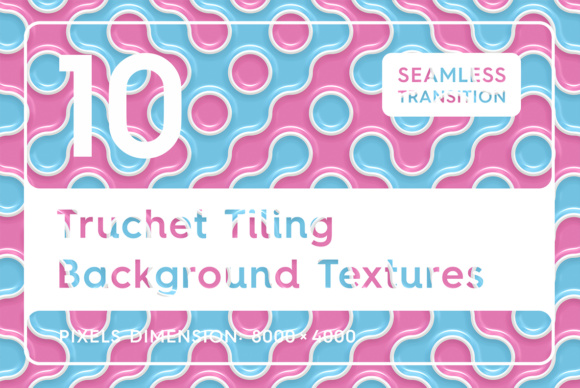
10 Truchet Tilling Backgrounds
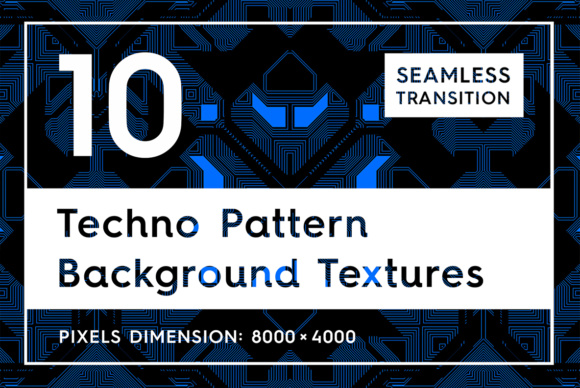
Truchet tiling is a deceptively simple visual system—built from just one or two rotated tile units—that generates endlessly varied, non-repeating geometric patterns. When executed at high resolution and with intentional color variation, it becomes a powerful design asset: structured yet organic, modern yet timeless, minimal yet rich in texture. The 10 Truchet Tilling Backgrounds pack delivers exactly that: ten distinct, algorithmically balanced tiling textures—each rendered as a crisp, 8000 × 4000 pixel JPEG—designed for real-world implementation across digital and print workflows.
Where These Textures Fit in Your Creative Process
Unlike generic noise or gradient overlays, Truchet patterns carry subtle rhythm and directionality. That makes them especially useful during the *mid-phase* of a project—after concept validation but before final polish—when you need visual cohesion without visual competition. A designer working on a mobile app interface might drop one of these backgrounds behind a translucent card component to add depth without sacrificing readability. A marketer building a webinar landing page could use a softly contrasted Truchet tile as a section divider—creating visual interest while maintaining brand alignment. In both cases, the background supports intent rather than distracts from it.
For educators developing slide decks or printable worksheets, these textures serve as low-cognitive-load visual anchors. Because they’re non-figurative and evenly distributed, they reduce perceptual strain compared to photographic or illustrative backdrops—especially important for accessibility and prolonged screen viewing. Similarly, small business owners creating social media banners or email headers benefit from the balance of professionalism and personality these tiles provide: clean enough for corporate tone, expressive enough to reflect brand voice.
Compatibility and Integration Across Tools
All ten files are delivered as standard JPEGs—no plugins, no proprietary formats, no licensing friction. That means immediate compatibility with Adobe Photoshop, Figma, Canva, Affinity Designer, Sketch, WordPress block editors, PowerPoint, Keynote, and even CSS-driven websites via background-image. No conversion step is needed. No scaling compromises. At 8000 × 4000 pixels, each file comfortably covers ultra-wide monitors, large-format prints (up to 27″ at 300 DPI), and responsive web layouts—even when cropped or layered.
If you’re using Figma or Adobe XD, drag any JPEG directly onto your canvas and set it as a fixed background layer. For web developers, assign it via CSS with background-size: cover and background-attachment: fixed for subtle parallax depth. Print designers can import into InDesign at full resolution and export PDF/X-4 without compression warnings. The simplicity of the format means less time troubleshooting compatibility—and more time iterating on layout, typography, and messaging.
Practical Workflow Examples
Game UI Design: Use a low-contrast Truchet tile (e.g., charcoal + slate gray) as a base layer beneath HUD elements. Its fine-grained structure adds tactile realism to digital interfaces without interfering with icon legibility or animation clarity.
Event Branding: Pair one of the brighter, bolder tiles (like cobalt + coral or mustard + deep teal) with matte-finish paper stock for postcards or flyers. The pattern holds up under offset printing and subtly reinforces brand energy without needing custom illustration.
Educational Content: Embed a muted Truchet background into Google Slides master layouts. It creates consistent visual framing across dozens of slides—helping learners orient themselves spatially while reducing the mental load of blank white space.
Software Dashboards: Apply a soft monochrome tile (e.g., warm gray + off-white) as a subtle backdrop to data tables or form fields. Unlike solid colors, it reduces glare and improves focus on interactive elements—particularly valuable in long-session tools like CRMs or analytics platforms.
Quality Control and Long-Term Usability
Each of the ten Truchet tiling backgrounds was generated using deterministic rotation logic—not random noise algorithms—ensuring seamless tiling at any scale. There are no visible seams, no pixelated edges, and no repeated 2×2 blocks that break visual continuity. This isn’t “good enough” texture; it’s engineered texture.
Color palettes were selected for both aesthetic range and functional reliability: three high-contrast pairs for bold applications, four mid-tone combinations for professional neutrality, and three monochromatic variants for minimalist or accessibility-first contexts. Every JPEG was exported with sRGB color profile embedded, avoiding unexpected shifts in browser or print output.
Because the files are static (not animated or procedural), they load instantly—no JavaScript dependencies, no render delays. That matters for performance-critical uses like landing pages or embedded widgets where every millisecond affects bounce rate and conversion.
Organizing and Maintaining Your Texture Library
Treat these ten files like modular components—not one-off assets. Save them in a dedicated folder named /textures/truchet/ within your broader design resource library. Add consistent naming: truchet-charcoal-slate-8000x4000.jpg, truchet-cobalt-coral-8000x4000.jpg, etc. This makes them instantly searchable in Spotlight, Finder, or Adobe Bridge—and simplifies batch operations if you later convert them to WebP or AVIF for web use.
For teams, store the folder in a shared cloud location with version history enabled. Since JPEGs don’t change, there’s no risk of overwrites—but having a clear source-of-truth prevents duplicate downloads or mismatched resolutions across projects.
How to Choose the Right Tile for Your Task
Ask two questions before selecting:
- What’s the dominant content type? Text-heavy layouts benefit from lower-contrast, softer-hue tiles. Image-dominant layouts can support higher saturation or sharper tonal jumps.
- Where will this be viewed? Screens favor slightly cooler or neutral palettes (they render more consistently across devices). Print benefits from richer, warmer tones—especially on uncoated stock.
You don’t need to match every tile to a specific project type. Instead, treat the set as a calibrated spectrum: start with the most neutral option, then adjust incrementally based on feedback, context, or platform constraints.
Real-World Implementation Tips
Don’t stretch or distort the files—use native dimensions whenever possible. If your canvas is smaller, crop thoughtfully: Truchet patterns have inherent directional flow (often diagonal or rotational), so center-cropping usually preserves visual balance better than edge-cropping.
Layer them intentionally. A Truchet background works best when paired with at least one level of visual hierarchy—such as semi-transparent overlays, bold typography, or strong focal imagery. Avoid stacking multiple complex textures; let this one do the work.
Test for accessibility. Run a quick contrast check between foreground text and the underlying tile region—not just the base colors, but actual pixel values sampled from the JPEG. Tools like WebAIM’s Contrast Checker or Stark plugin handle this reliably.
Finally, revisit your selections after 24 hours. What felt dynamic on day one may read as busy on day two. Truchet tiling rewards restraint: one well-chosen tile, applied consistently, often outperforms five competing options.
Why This Fits Into Sustainable Creative Practice
High-resolution, reusable assets like the 10 Truchet Tilling Backgrounds reduce dependency on stock services, AI generators, or custom commissions for routine texture needs. That saves time, budget, and decision fatigue—especially for freelancers juggling multiple clients or educators producing weekly materials.
More importantly, it supports consistency across outputs. When the same foundational texture appears in a client presentation, their website banner, and their printed brochure, it quietly reinforces coherence—without requiring a full brand guideline document.
These aren’t decorative afterthoughts. They’re infrastructure. Thoughtful, scalable, interoperable infrastructure—designed to integrate, not interrupt.